
By the fourth film in the series, released in 1988, the formula had settled: teenager falls asleep, Freddy improvises a death around whatever’s in the room. For Debbie Stevens (Brooke Theiss), the room has a weight bench and, later, a box of Roach Motel poison. The effects work for the film was split across several shops to make the schedule — Steve Johnson’s XFX handled the waterbed death and the “Chest of Souls” finale, Kevin Yagher did Freddy’s makeup — and George’s shop, S.M.G. Inc., was given exactly one sequence to own: Debbie, start to finish.
The transformation, stage by stage
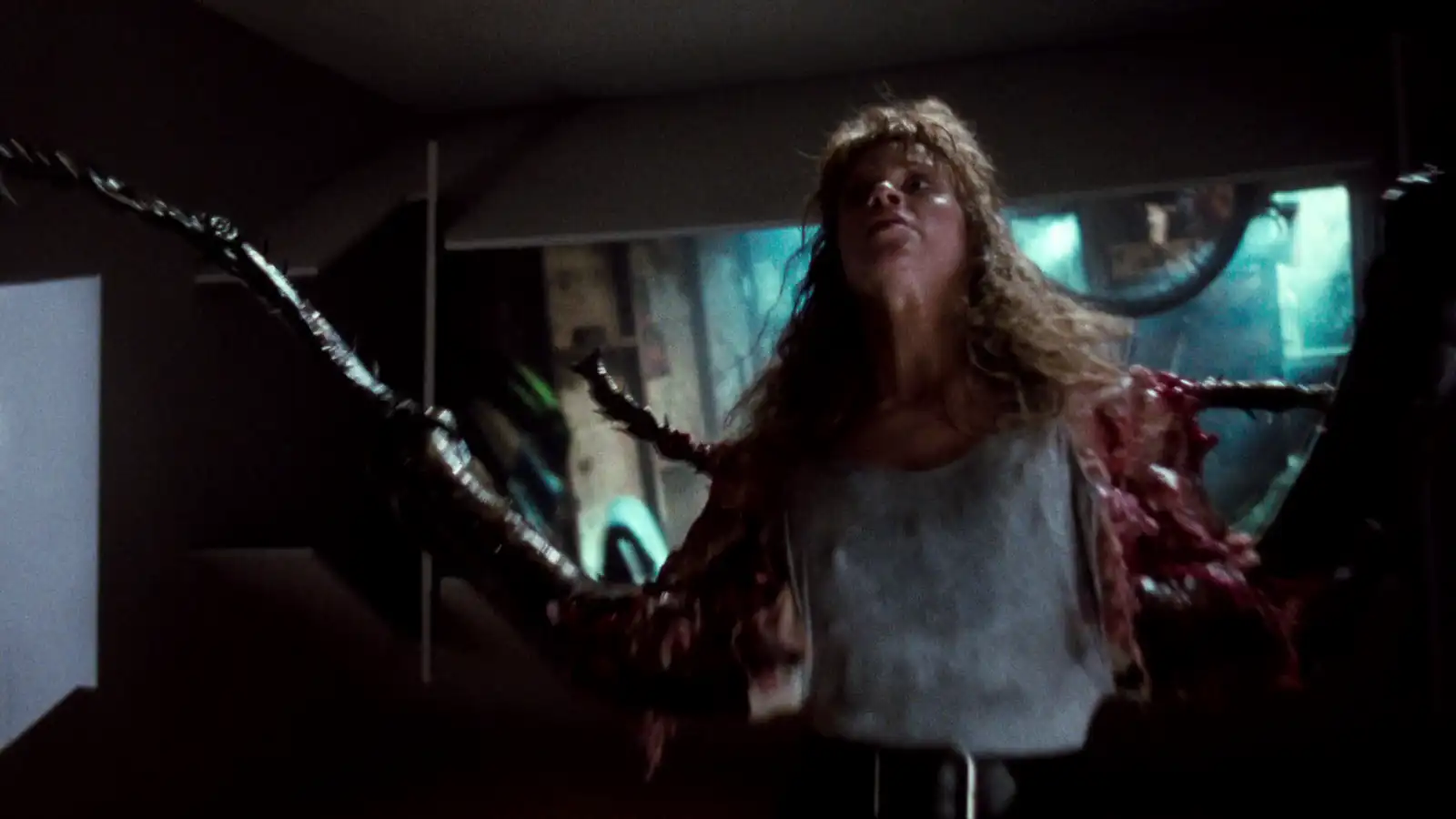
It happens in three visible stages. First the arms: Debbie is bench-pressing when Freddy leans in as her spotter and drives the bar down. Her elbows bend the wrong way and split open as insect limbs push through the tears.
Then the skin: running from Freddy, Debbie’s human surface starts sloughing away to show a shiny black exoskeleton underneath, and when she goes face-first into adhesive and peels her own face away like a mask, revealing the cockroach beneath. Then comes the scale change: Freddy corners a giant Roach Motel box, with Debbie trapped inside as a full creature puppet, and crushes it in his hand.
George remembered Theiss volunteering to perform inside the roach suit and handling the full-body cast and slime without complaint. 1 The exact mechanics behind the stages remain undocumented here; the sequence above describes what the film shows.
What survives the tonal shift
The Dream Master pushes the series toward one-liners and music-video pacing. The roach sequence moves the other way: it holds on a body becoming something else, stage after stage, and lets the practical transformation do the work.
Sources
- Remembering “Screaming Mad” GeorgeGeorge explains how he won the roach-sequence bid and describes Brooke Theiss working inside the effects rigs.Site source record